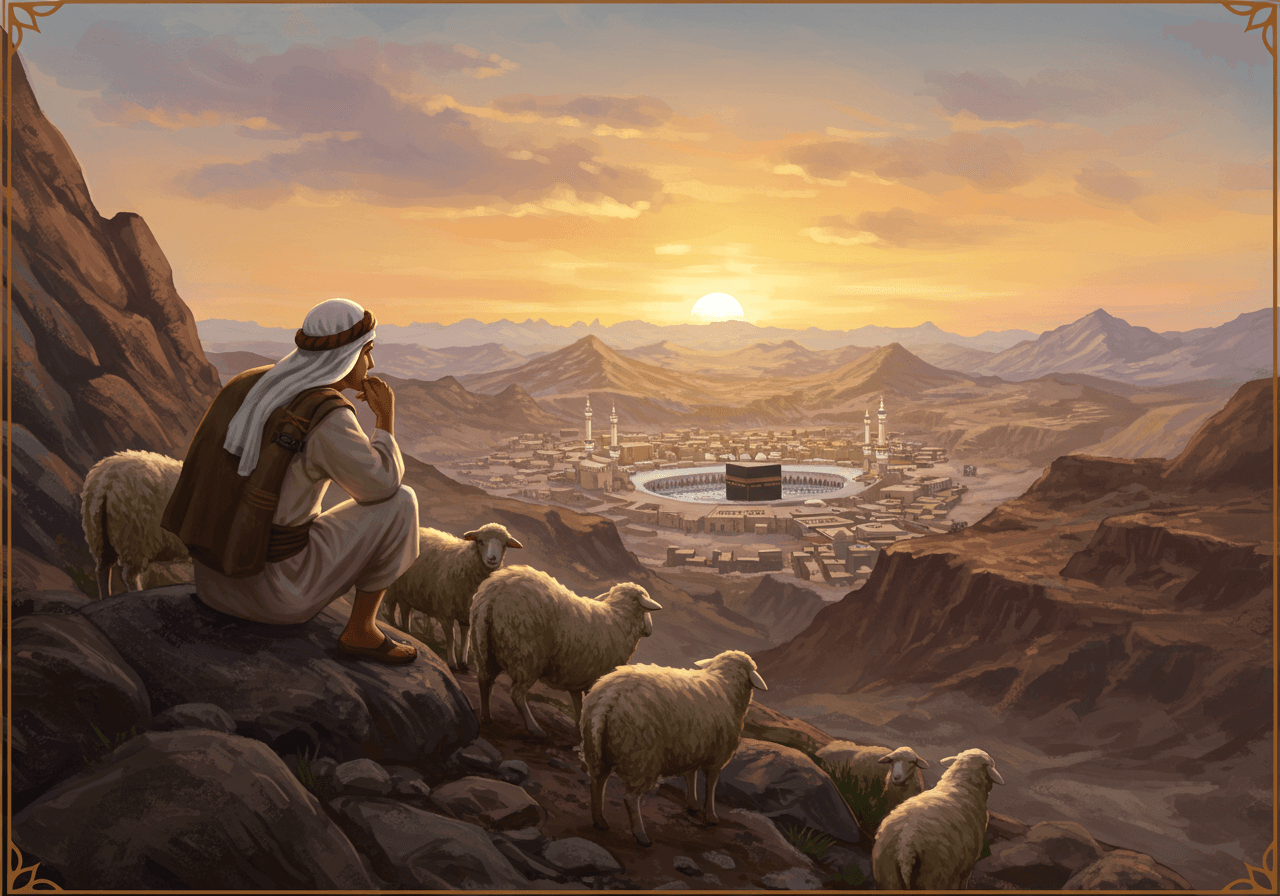
The Prophet's childhood was marked by great loss. His mother, Aminah, passed away when he was only six, and his beloved grandfather, Abdul-Muttalib, died when he was eight. The responsibility for his care then fell to his kind uncle, Abu Talib, who loved him dearly.
To help his uncle, the young Muhammad ﷺ began working as a shepherd, tending to the flocks of the Meccans on the hillsides surrounding the city. This humble profession was a powerful training ground, as it had been for many prophets before him, including Moses and David. It taught him patience, compassion, vigilance, and a deep sense of responsibility for those under his care.
As he grew into a young man, his character became his defining feature. In all of his dealings, whether as a shepherd or later as a trader, he became known for his flawless honesty and integrity. He never lied, cheated, or broke a promise. His reputation was so perfect that the people of Mecca—friends and foes alike—gave him two titles: Al-Amin (The Trustworthy) and As-Sadiq (The Truthful).
People would entrust their most valuable possessions with him for safekeeping, knowing they would be perfectly secure. In a society where tribal disputes were common, he was often chosen as an arbitrator to settle arguments because everyone knew his judgment would be fair and just. This universal recognition of his character was crucial, as it would later prove that his call to prophethood was not for any personal gain, but was a divine message from a man who had lived his entire life as a paragon of truth.
Knowledge Check
Test your understanding to complete this lesson.
Quiz coming soon.